
Becoming a creator
How regularly completing smaller projects boosts your natural creativity

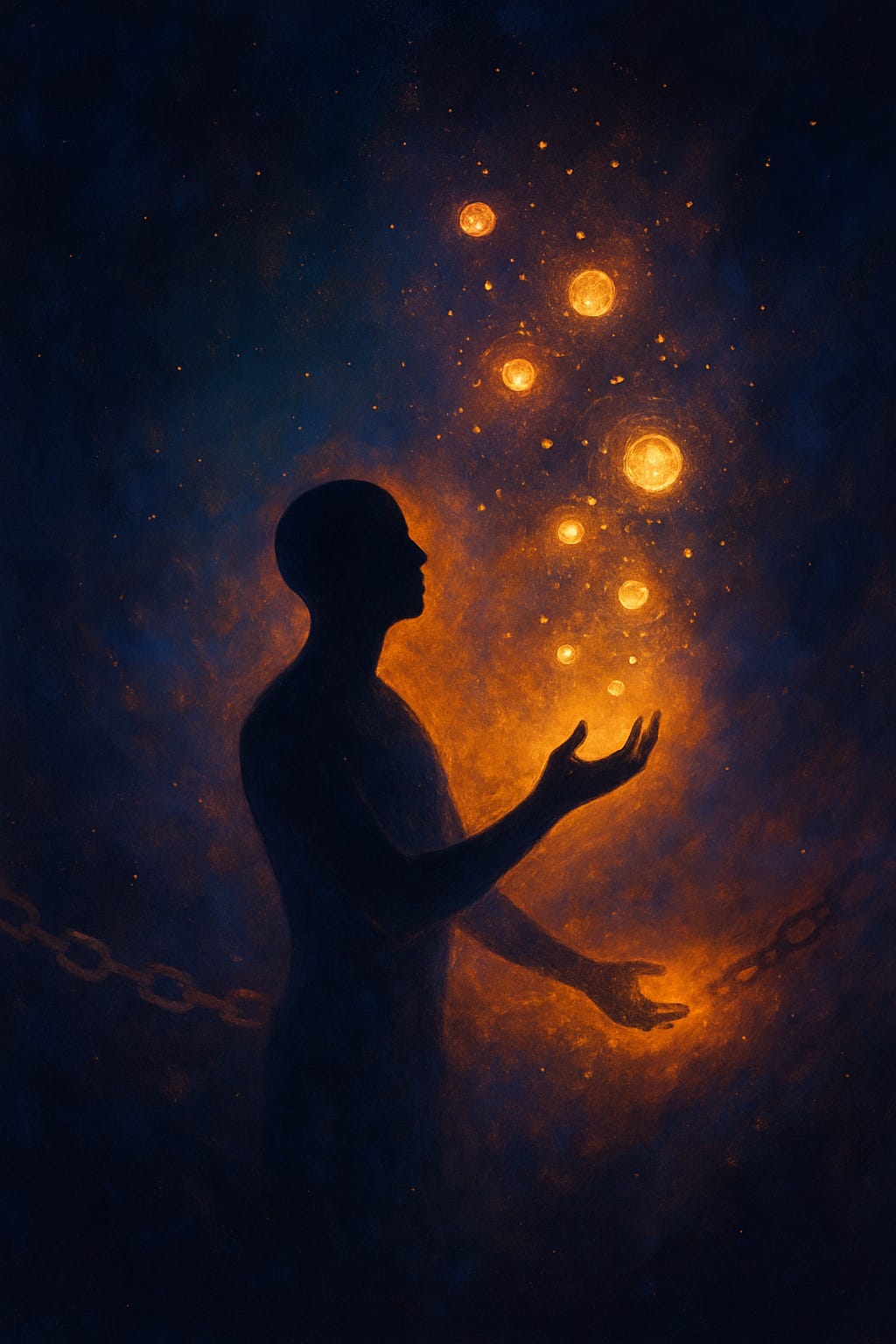
It’s a trap! You courageously decide to finally tackle a new project, your passion project. Be it a book, a film, a film script, a business venture, or something else entirely. And then you’re sitting there with the whole mission on your back, trying to concoct it and put it into action. There’s a catch: You’re in one or two phases of the creative process for a long time without moving on to the other phases. Is that something to consider? Yes, for me it is. Because the creative process consists of many different processes, including the completion and the resulting learning, and being nourished by the completion of the project. If you haven’t learned that beforehand, you could eventually run out of steam on the long road to creating your passion project. While studying Robert Fritz’s book “Creating,” I was struck by lightning: I thought I already had a good, lifelong experience in creating simple things. But the reality is different: I was more of a problem solver than a creator. What’s the difference? Simply put, as a problem solver, I’d like to get rid of something. As a creator, I want to invent something entirely new, out of my love for seeing it exist in the world. This is something (pro-)active, less reactive than the problem-solving orientation. The difference isn’t always obvious. Sometimes creation disguises itself as problem-solving:
“I want to make a movie!”
“Why do you want to make a movie?”
“Because I want to show Mom I can do it” or “Because I have to show the world something so it finally changes to a better place.”
Can you see the problem here in the last two statements? The purpose of your actions largely determines whether you want to solve a problem or invent something new that doesn’t create a problem.
In school, we’re trained to solve problems, less so to create. This means we need training in this, initially in very simple things like “baking a cake,” “arranging a bouquet of flowers,” “writing a poem,” etc. All things you can accomplish in a few minutes to a maximum of two hours. You already cook? You already write poems? Cool! How holistically do you approach this as a professional creator or as a professional creator in the making, studying the creation process, which you’ll later need, especially for longer projects? This includes conceptualization, visualization, listing exactly what’s already there and what’s still missing, building creative tension and momentum for the creation process, learning experimentally and practically from taking action, and completing the process within a deadline and without adding anything you didn’t visualize (not because it’s bad or not useful to improve your creation, but because it’s an important skill to learn to bring things to an end). Moreover, creating exactly what you initially wanted without improvising or deviating from it immediately may be something that takes practice as well and gives you more possibilities for manifesting things in the world. The special thing about the creation process is that it provides you with incredible energy, both for the creation of the current project and at some point during the process also for the next one. Being a creator means having a constant ecstatic experience, being fully nourished with energy and inspiration, ready for the next creation. The more you practice this, the more your brain opens up to inventive thinking, and suddenly you find yourself in a persistent state in which you can constantly conjure up new possibilities for yourself and others. I’m currently experimenting with a small creation every day for a week, lasting 10 minutes to a maximum of 2 hours, following Robert Fritz’s form (see more in his book “Creating”):
1. Create a concept
2. Visualize
3. Precisely answer: What is the current reality?
4. Action
5. Adapt – Evaluate – Learn – Adapt
6. Build momentum
7. Always have a place to go
8. Completion
9. Living with your creation
I am now naturally learning to be a permanent creator. Longer projects can now be the result of a natural learning process without overwhelming me.